What Are Property Owners’ Responsibilities in Connecticut Slip and Fall Cases?
A severe injury from a sudden fall can disrupt your life in an instant. Victims often face mounting medical bills, lost wages, and painful recoveries. When these accidents happen on someone else’s property in Connecticut, determining who is financially responsible can be a complex legal process. The law dictates that premises must be kept reasonably safe, but property owners’ responsibilities fluctuate depending on several critical legal factors.
Understanding your rights and the legal obligations of property managers is essential if you plan to pursue compensation. Premises liability laws in Connecticut outline exactly how and when an owner can be held liable for injuries sustained on their grounds. By knowing these specific rules, injured individuals can better evaluate their circumstances and build a stronger foundation for a legal claim.
The personal injury attorneys at Jacobs & Dow, LLC, outline the legal duty to maintain safe premises and explain the fundamental concepts behind slip and fall cases. We will explore how the type of visitor determines the level of care required, the crucial concept of legal notice, and how specific hazards like winter weather impact liability.
What responsibilities do property owners have in Connecticut slip and fall cases?
Property owners in Connecticut are generally responsible for maintaining reasonably safe premises, warning visitors about known hazards, and addressing dangerous conditions within a reasonable timeframe.
The Visitor’s Status: Determining the Duty of Care
The level of responsibility a property owner owes an individual depends heavily on why the person is on the property. Connecticut law classifies visitors into three distinct categories. Each classification carries a different degree of responsibility for the property owner.
Invitees: Highest Duty, Active Inspection, and Warning
Invitees are individuals who enter a property for business purposes. This group includes retail customers, clients visiting an office, and delivery personnel. Property owners owe invitees the highest duty of care.
This legal obligation requires owners to actively inspect their premises for potential hazards. They must keep the property safe, make necessary repairs promptly, and provide clear warnings regarding any dangers that cannot be immediately fixed.
Licensees: Duty to Warn of Known, Hidden Dangers
Licensees are individuals who enter a property with permission but for non-business reasons, such as social guests attending a dinner party. For licensees, property owners’ responsibilities are slightly lower.
Owners must warn their guests of any known, hidden dangers that the guests are unlikely to discover on their own. However, owners are not legally required to actively inspect the property for new or unknown hazards prior to a social guest’s arrival.
Trespassers: Limited Duty and General Safety Obligations
Trespassers are individuals who enter a property without permission or lawful right. Generally, property owners owe no duty to keep their premises safe for trespassers. The primary legal obligation an owner has toward a trespasser is to refrain from causing intentional harm.
1. The Critical Element of “Notice”
Proving that a hazard existed is not enough to win compensation in slip and fall cases. The injured party must also prove that the property owner had legal “notice” of the dangerous condition.
This concept establishes that the owner knew, or reasonably should have known, about the hazard before the accident occurred. Notice comes in two primary forms.
Actual Notice: Direct Knowledge of a Hazard
Actual notice occurs when the property owner or their staff is directly informed of the hazard. For example, if a grocery store customer reports a spilled bottle of juice to a manager, the store now has actual notice of the spill.
If the staff fails to clean it up and someone slips, the owner can be held liable because they possessed direct knowledge of the danger.
Constructive Notice: Implied Knowledge
Constructive notice applies when a hazard has existed for a sufficient amount of time that a reasonably careful property owner should have discovered it. This implies that routine inspections and standard maintenance would have revealed the danger.
If a spill remains on a supermarket floor for several hours, a court may determine the owner had constructive notice, even if no one explicitly reported the puddle to the staff.
2. Mitigating Hazards: Warnings and Remedial Actions
Property owners cannot always fix a hazard immediately. When immediate repair or removal is impossible, they have a strict responsibility to take mitigating action to protect visitors.
Failing to secure an unsafe area is a common trigger for slip and fall cases. If a floor was recently mopped, a handrail is broken, or a walkway is icy, the owner must provide clear warnings.
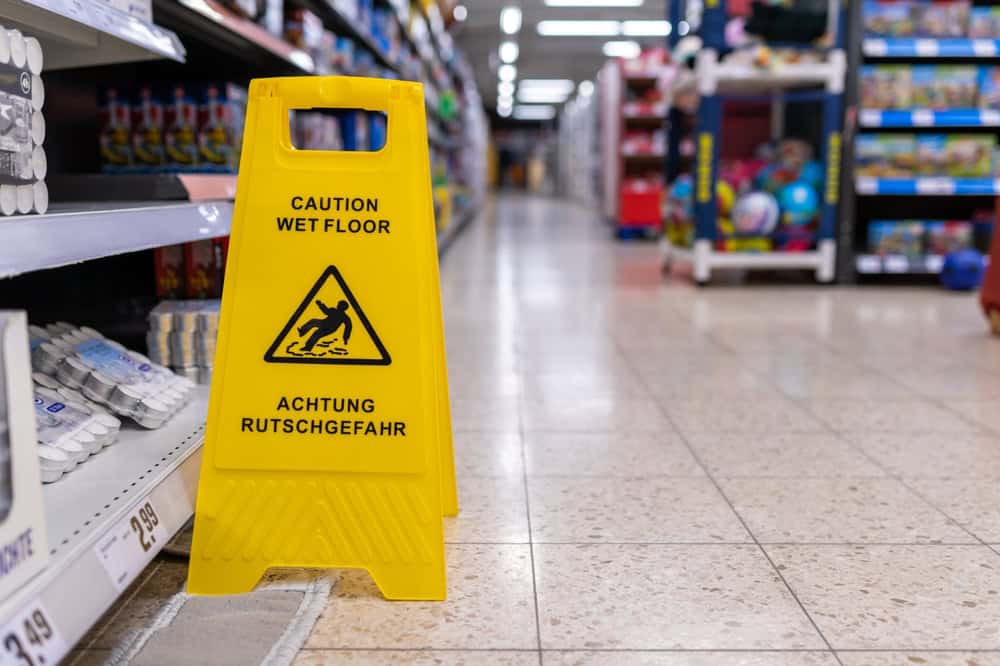
Effective mitigation strategies include securely roping off the dangerous area, locking doors that lead to hazardous zones, or posting highly visible warning signs, such as bright yellow “Danger: Wet Floor” cones. These actions help satisfy the owner’s duty to warn visitors of dangerous conditions.
3. Special Considerations for Snow and Ice
Winter weather brings specific legal rules for property owners in Connecticut. While owners generally have a duty to keep walkways, parking lots, and stairs clear of snow and ice, the law provides a reasonable timeframe for them to do so.
Crucially, owners are generally not held liable for falls that occur while an active storm is ongoing. Their legal duty to clear the snow and make the premises safe typically begins a reasonable amount of time after the storm has officially ended.
This allows property owners a practical window to address the accumulation without being penalized during active, unpredictable weather events.
Secure Your Rights After a Slip and Fall Accident
Navigating the aftermath of a severe fall requires a clear understanding of premises liability law. Property owners must fulfill their legal duty to maintain safe environments, but their exact obligations depend on the visitor’s status, their awareness of the hazard, and weather conditions. Proving liability requires demonstrating that the owner failed to meet these standards, directly resulting in your injuries.
If you or a loved one has been injured on someone else’s property, you do not have to handle the legal complexities alone. The experienced legal team at Jacobs & Dow, LLC is highly skilled in handling Connecticut slip and fall cases.
We understand the nuances of property owners’ responsibilities and know how to build a compelling case to maximize your compensation. Contact Jacobs & Dow, LLC today to discuss your situation and protect your legal rights.